
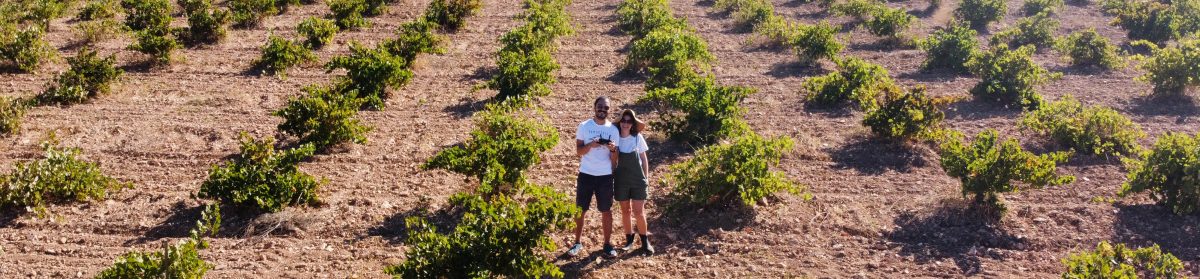
Before saying hello to our little girl, we chose Dubrovnik for what would be our last trip alone for a while. When choosing our destination, we never imagined that we would taste this much wine in Croatia and buy nearly a suitcase full of wine on our way home 🙂 We had so little knowledge about Croatian wines that it didn't even occur to us to look into it until the last days.
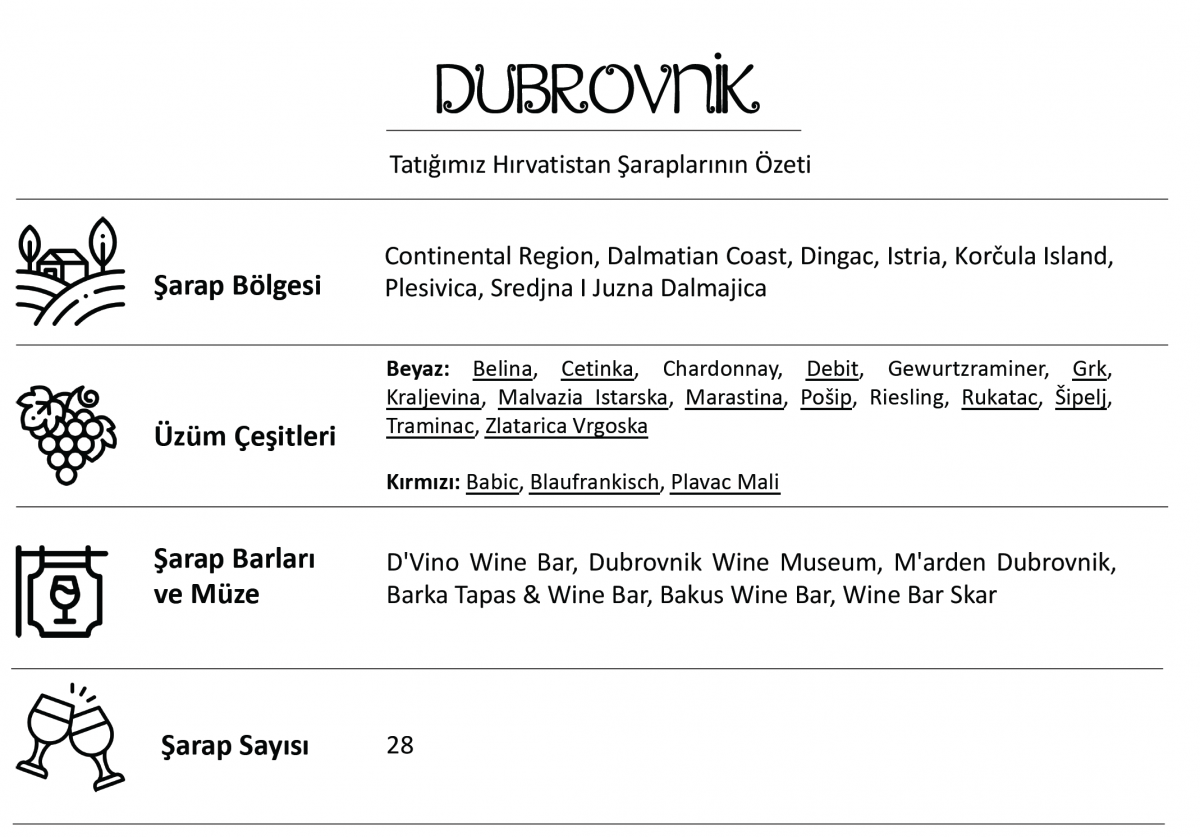
After the unexpected diversity and beauty of the wines we tried while relaxing at a wine bar very close to our hotel in the city center, our 4-day trip essentially turned into a wine journey. We really liked how Croatians take such pride in their own indigenous grape varieties, and we added a new wine terroir to our knowledge base.
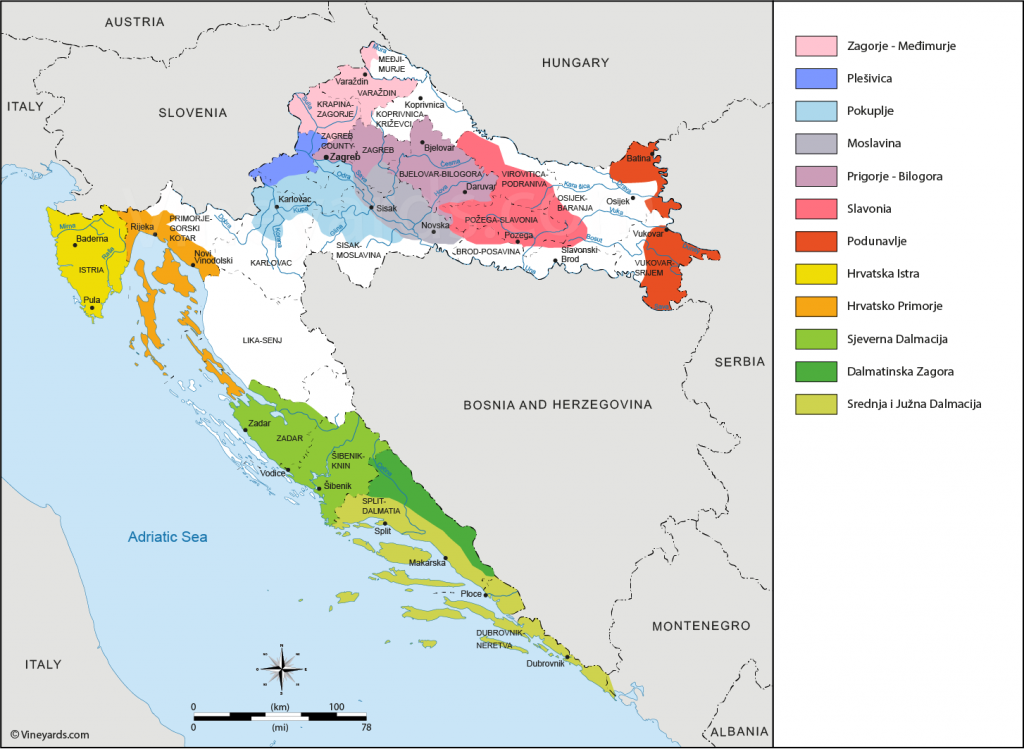
Source: https://vineyards.com/wine-map/croatia
Dubrovnik is a very suitable destination for those who want to try an alternative wine route, with its wine bar variety, wine museum, and proximity to regions where wineries are located (1 to 2 hours). It's possible to satisfy your wine cravings while doing a historic tour in this city, which is one of the best preserved ancient areas in Europe.
Our notes on the bars we had the chance to visit and the cafés/restaurants we really enjoyed (Click to add to Google Maps):
D'Vino Wine Bar
This wine bar, which we stopped by to relax on the first night, right next to our hotel, was the place that changed all our perspectives on Croatian wines. At this venue where quite high-quality wines are served by the glass, it's possible to taste 36 different Croatian wines by the glass! In addition to these, they also offer wine by-the-glass options that change regularly every week. If you're as lucky as us, you can taste an aged Croatian wine by the glass. Tasting a 2008 vintage wine by the glass was quite enjoyable.
In addition to by-the-glass wine service, the venue also has wine tasting menus available until 9 PM. This venue, which offers a diverse wine tasting menu with 7 different lineups, is at the top of our list if we ever revisit Dubrovnik.
Dubrovnik Wine Museum
We approached the wine museum in Dubrovnik, an extremely touristic city, with prejudice. This museum, which we thought might have been opened with touristic concerns, proved us quite wrong. The museum offers quite detailed information about Croatian wine history, grape varieties, and wine regions. At the same time, after completing the museum tour, it also provides the opportunity to do tastings with 7 different tasting menus ranging from 10 to 100 EUR. This way, theoretical knowledge is reinforced with practical knowledge 🙂 Another feature of the museum is the ability to taste examples of wine aged underwater, which has recently become famous in countries like Croatia and Montenegro. Having access to tastings that include an underwater amphora example whose regular retail price is 340 EUR is an excellent service. At the wine sales section at the museum's exit, it's also possible to purchase wines from some producers even cheaper than from the producers themselves.
M'arden Dubrovnik
After spending 3 days in a city almost entirely made of stone, just being able to sit in a place designed amidst greenery is a wonderful feeling 🙂 The quality of M'arden wine bar stands out with both its venue and its alternative wine menu. At this bar, which has quite different grape varieties and wine types from other wine bars, it makes great sense to come to increase your familiarity with Croatian wines. We were particularly impressed by the fact that they include limited production wines from boutique producers on their menu.
We left this venue, where we opted for the orange wine tasting, quite happily.
Barka Tapas & Wine Bar
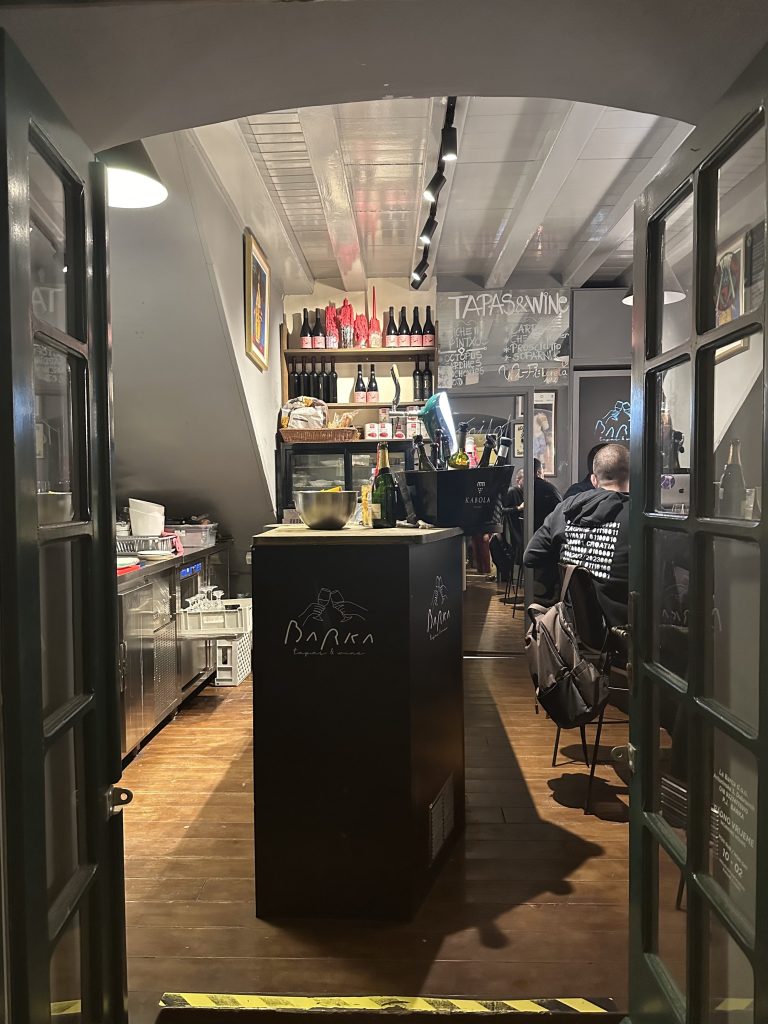
Although its menu is more limited compared to other wine bars, it's a venue that can be preferred especially for its food. The owner is also quite pleasant to chat with 🙂 It's possible to have detailed conversations about wines. Options offered by the glass: A total of 6 whites, 2 reds, 1 rosé, and 1 sparkling wine.
Bakus Wine Bar
It was the most touristic wine bar we visited. Definitely very beautifully designed, worth stopping by for a glass of wine just for the design alone.
The first wine we tried by the glass was faulty. Although the sommelier tried to make us drink it saying "this wine is like this," fortunately the owner was there so our money didn't go to waste 🙂
There are no tasting menus, and by-the-glass options are a bit limited. But it's worth stopping by for a glass of wine just for the ambiance.
Wine Bar Skar
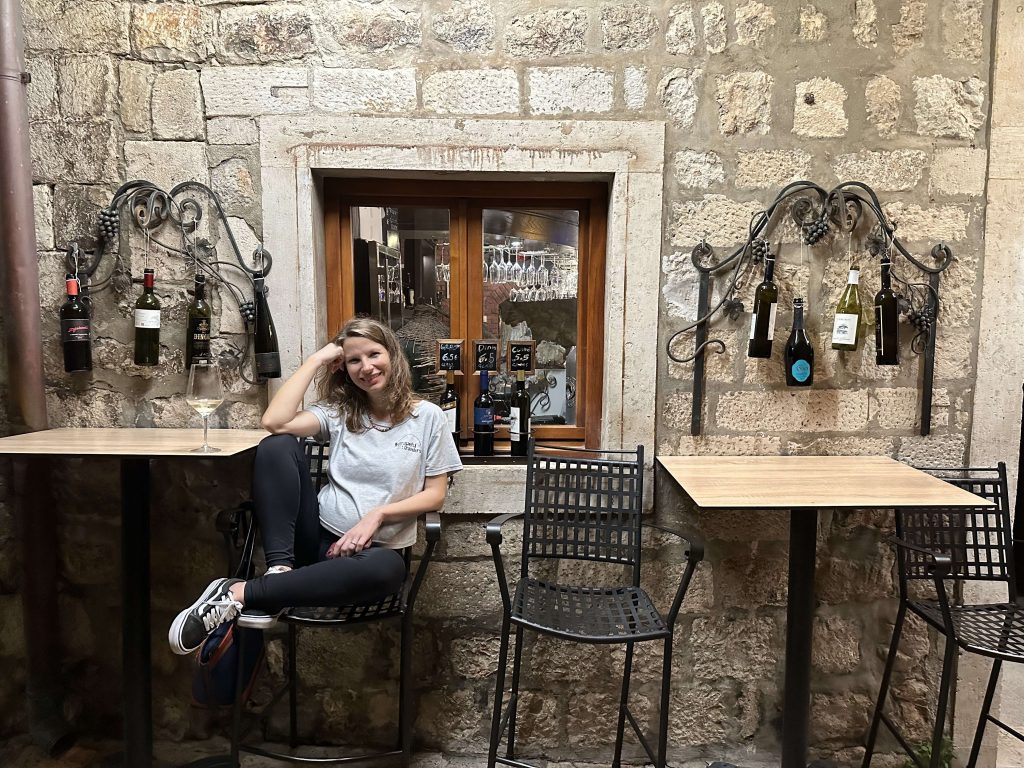
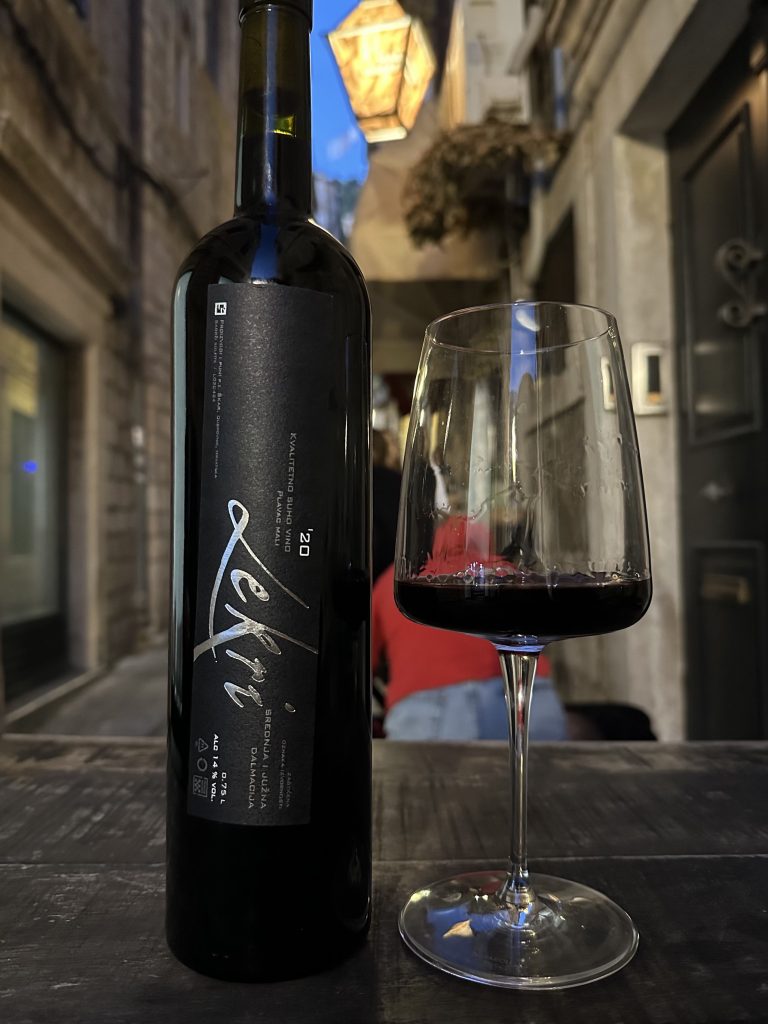
A wine bar of a producer that does boutique production at their winery, located 15 minutes from the city. Therefore, only their own wines are on the menu. It was a wine bar that made us happy because we had the opportunity to taste all the wines they produce at their winery and chat about their production processes. If you go without having very high expectations about their wines, it will be a place you'll leave happy 🙂
In addition to the 3 wines on the tasting menu, the fact that they also offered 2 liqueurs, again their own production, as a complimentary treat was also quite thoughtful.
General Comments and Notes
Our general observations and different information about Croatian wines:
- They express that the biggest reason the country's winemaking hasn't been heard much on the international arena is the Croatian names of the local grapes. While this seems a bit silly at first, the pronunciation of some grapes is really so difficult that you may not get used to them even after having them several times.
- The most famous red wine grape in the country: Plavac Mali. It was formed as a result of crossing Crljenak Kaštelanski, the ancestor of Zinfandel, with Dobričić. The most produced and processed grape in the country, quite suitable for aging, and very delicious wines are made from it. It also became our favorite grape on this trip. Although its name appears as Dingač and Postup in regions with different appellations, when you see these names on the label, you can know that you're getting Plavac Mali.
- Well-made Dingač wines are truly superb. The most notable characteristic of an aged Dingač is its tobacco aroma. Its tannins maintain their structure despite 10 to 15 years of aging.
- After Plavac Mali, the 3 most famous white grape varieties in the country are Grk, Pošip, and Malvasia. While generally softer, more easy-drinking wines are made from Pošip, full-bodied whites are produced from Grk. Malvasia is a grape that will please aromatic wine lovers.
- White grape options are quite abundant, while it's not very possible to find a variety other than Plavac Mali among reds.
- Generally, restaurants have a very diverse selection of white and red wines. This alone is actually one of the details showing that the country is a wine country. We even saw Turkish wine examples on the menu of a quite elegant restaurant, which was one of the moments that made us happiest on this trip.
Favorite Wines
Our top 5 favorite wines were:
- Matusko, Dingač Royal Selection Barrique, Plavac Mali, 2013, Red, Croatia, Dingač: Caramel, biscuit, baby biscuit, nougat ice cream on the nose. Matured dark fruits and intense sour cherry. On the palate, all the aromas maintain their nose intensity. Smooth drinking and the aromas that come with aging enrich the palate. It particularly gives a sensation like eating baby biscuits. An aroma intensity that makes your mouth water just by smelling it. Superb. 8/10
- Radovanović, Heritage, Grk, Pošip, 2019, White, Croatia, Dalmatian Coast: Color is golden yellow, linden, honey, linden honey, ripe yellow fruits on the nose. Impressive aroma intensity. Slight saltiness on the palate, very well matured. Full-bodied, long finish. Oak aromas make themselves felt from deep as smoky and smoked flavors. A balanced blend. 7.75/10
- Edivo Navis, Mysterium From the Sea, Plavac Mali, 2016, Red, Croatia, Dingač: Croatia's famous underwater-aged wine. Its color is darker compared to the non-underwater-aged version. Darker fruits on the nose. Oak is felt with clove but not dominant. Smooth drinking on the palate, much lighter and aromas more prominent compared to the non-underwater-aged version. The effect of the sea is truly felt. Spiciness is intense, tannins are denser but less angular. 7.5/10
- Iločki Podrumi Principovac Traminac Izborna Berba Traminac (Gewürztraminer), 2022, White-Sweet, Croatia, Continental Region: Honey, quince, lovely ripe and sweet yellow fruits on the nose. Very slight sweetness on the palate but it feels like it comes from the aromas. Nice aroma intensity and long finish. A slightly vinegary sharp aroma coming from deep, typical of sweet wines, is present but definitely doesn't bother. Quite enjoyable to drink. 7.45/10
- Vinoteka Gracin-Kiridžija Kontra Babić, Plavac Mali, 2012, Red, Croatia, Dalmatian Coast: A slight paste-like aroma on the nose from aging. Tobacco, dried fruits on the palate. The tobacco on the palate is so intense it creates a sensation almost like chewing tobacco. Very high acidity, high but soft tannins, long finish. Quite nice intensity. 7.45/10
Bonus: Barba & Gianni
Although we generally don't write many non-wine recommendations, we couldn't pass without writing about these two special places. These two restaurants/cafés, which we visited two days in a row, are must-visit places in Dubrovnik.
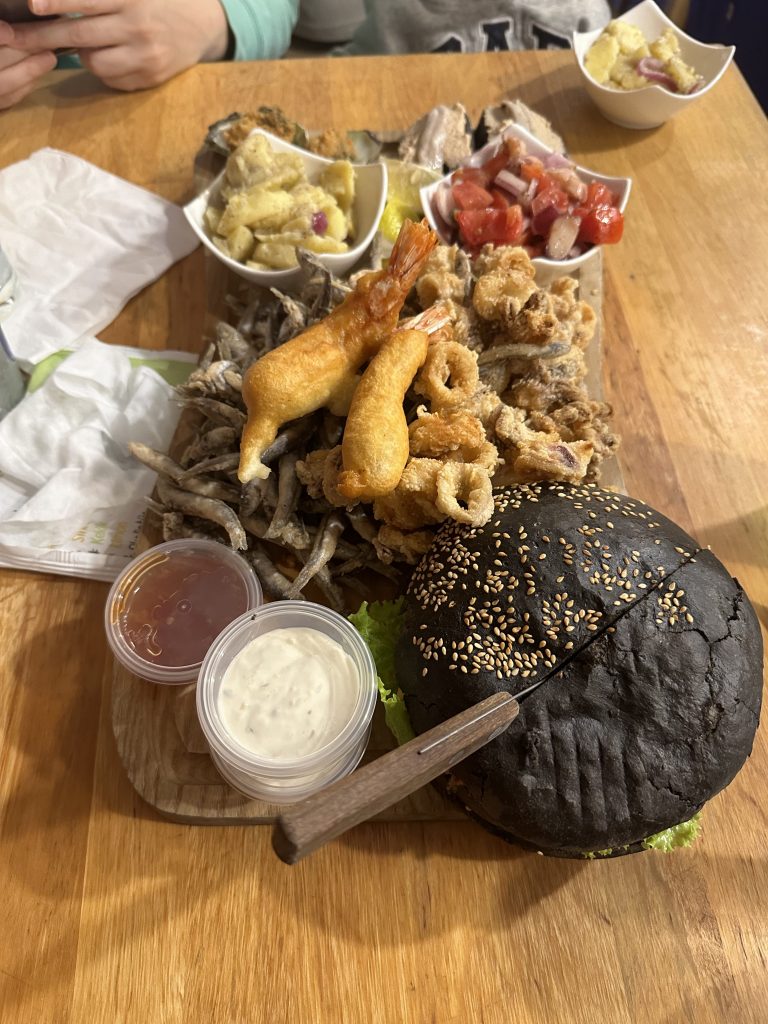
Barba is an absolute paradise for seafood lovers. The restaurant, which mainly makes fried/fast food concept dishes, has excellent seafood burgers and fried calamari. It's worth not passing on the mixed seafood platter.
Gianni is a superb pastry/ice cream shop. What we ate was so good that we devoured them without even taking a photo 🙂 We especially loved the chocolate dessert called Black Forest. You can pamper your hungry bodies after wine tasting at these places 🙂